

On 16–17 October 2026, the 2026 International Conference on Digital Lifelong Learning, themed “Intelligent, Innovative and Inclusive”, was held in Shanghai, China. Jointly organised by Shanghai Open University (SOU), the UNESCO Institute for Information Technologies in Education (UNESCO IITE) and the UNESCO Institute for Lifelong Learning (UIL), the conference brought together education leaders, researchers, policymakers and practitioners from around the world. It provided a platform for international dialogue and exchange of ideas on how artificial intelligence (AI) and digital technologies can contribute to more inclusive and innovative lifelong learning.
Promoting inclusive learning in the age of AI
As AI continues to transform education, lifelong learning is becoming increasingly important in responding to changing skills needs, population ageing and inequalities in access to educational opportunities. In line with Sustainable Development Goal 4, the conference explored ways to make learning more accessible, flexible and inclusive for people of all ages and backgrounds.
The programme featured keynote speeches, parallel thematic sessions and plenary discussions addressing AI-driven lifelong learning and the transformation of education.
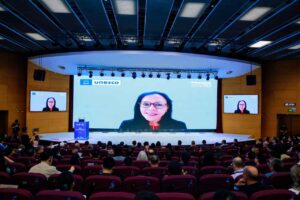 In a video message delivered during the opening ceremony, Dr Shafika Isaacs, UNESCO IITE Director a.i., welcomed conference participants. She outlined three key commitments shared by UNESCO IITE and Shanghai Open University: putting learners at the centre, promoting openness through open universities and open educational resources, and fostering inclusion through human connection, trusted local institutions and strong partnerships. Together, these commitments reflect a shared vision of lifelong learning as a common good for all, at every stage of life. Dr Isaacs also emphasized the importance of maintaining open dialogue and translating these commitments into collective action.
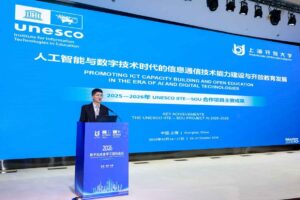 Professor Xiao Jun, Dean of School of Science and Engineering at Shanghai Open University, presented the key achievements of the project “Promoting ICT Capacity Building and Open Education in the Era of Artificial Intelligence and Digital Technologies” jointly implemented by UNESCO IITE and SOU. In 2025–2026, the project focused on strengthening teachers’ digital and AI competencies and developing supporting resources, including analytical reports, online courses, assessment tools and guidelines.
 At the conference, UNESCO IITE was represented by Mr Mohamed Jemni, Chair of the Governing Board, Mr Didier Jourdan, Vice Chair of the Governing Board, Mr Dato’ Dr. Ahmed Ansary, Member of the Governing Board, who delivered keynote speeches and contributed to thematic discussions. In a session on AI-enhanced curriculum and teaching innovation in senior education, Ms Ekaterina Pushkareva, Programme Specialist at UNESCO IITE, presented the results of the Institute’s initiatives aimed at enhancing digital literacy and promoting digital inclusion among older adults.
Strengthening international cooperation
A working meeting of the Global Network for Digital Lifelong Learning, chaired by Professor Jia Wei, President of Shanghai Open University, took place as part of the conference. Network members reviewed the progress achieved in 2026 and discussed priorities for future cooperation.

Established in October 2024 at the initiative of Shanghai Open University and UNESCO IITE, the Global Network for Digital Lifelong Learning brings together 18 organizations from around the world. It facilitates international cooperation and resource sharing to advance open education and lifelong learning, promote educational equity and inclusion, and help bridge the digital divide. Through continued collaboration, members aim to turn shared knowledge and expertise into practical initiatives that support institutions, educators and learners in responding to the opportunities and challenges of digital transformation.
Recognising research and innovative practices
The conference also provided a platform for presenting research and innovative practices in digital lifelong learning. Researchers, educators, policymakers, practitioners, students, higher education institutions, international organizations, NGOs and industry partners were invited to submit original research papers and case studies on a wide range of topics.
During the closing ceremony, Professor Jia Wei, President of Shanghai Open University, and Mr Mohamed Jemni, Chair of UNESCO IITE Governing Board, presented awards recognising outstanding teaching achievement cases, research papers and case studies.


