
Two editions of an international webinar on how intentional uses of AI in the classroom can strengthen learning took place on 12 March 2026, jointly organized by the UNESCO Institute for Information Technologies in Education (IITE) and the Associated Schools Network (ASPnet). Bringing together educators from across the globe, the events highlighted both the opportunities and challenges of integrating AI into classroom practice.
The first webinar, conducted in English, attracted over 200 registrations from 24 countries. Opening remarks by the ASPnet International Coordinator Ms Lydia Ruprecht set the stage for collaboration, while IITE representative, Ms Natalia Amelina, introduced IITE’s multilingual E-library for Teachers platform developed with NetDragon to support teacher training and global partnerships.
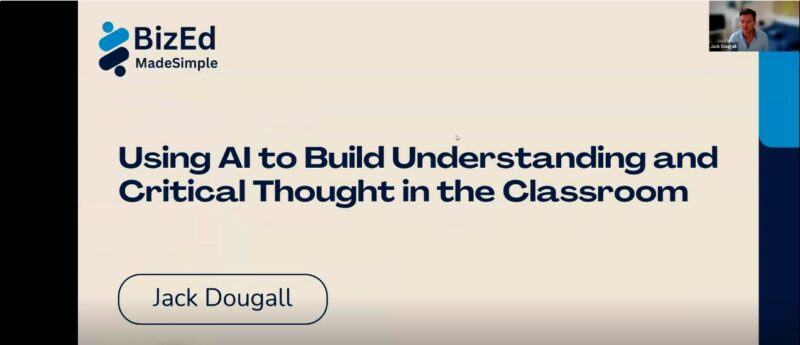
The main presentation was given by secondary school teacher and AI Lead Mr Jack Dougall and focused on using AI to foster critical thinking rather than shortcut learning. Drawing on classroom experiments, he demonstrated that students who actively engaged in dialogue with AI tools developed deeper understanding compared to those who relied on generated answers. The speaker emphasized that AI should serve pedagogy, not replace it, and encouraged educators to focus on ethical, inclusive, and effective use of technology.
Educators from the Czech Republic, Greece, and Malaysia shared practical experiences, introducing projects blending AI with cultural exchange, historical learning, and student wellbeing. A recurring theme was the importance of maintaining human-centered teaching while leveraging AI as a collaborative tool.
The second webinar, held in English with Spanish interpretation, gathered around 140 attendees from 24 countries. It followed a similar structure, combining expert input with interactive exchanges. Discussions expanded on the broader implications of AI, including its impact on teaching standards, environmental concerns, and equitable access.
Across both sessions, participants underscored the need for clear school policies on AI, ongoing teacher support, and a shift in mindset: from viewing AI as a threat to embracing it as a context in which modern education now operates.