Combating COVID-19: Updates

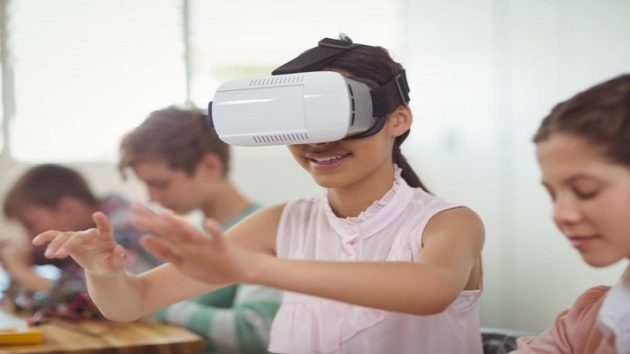
Many teachers don’t use technology in the classroom often: here’s how to change that

29 October 2020

The move from traditional face-to-face instruction to distance learning has been a challenge, not only for students and families, but for teachers. According to data from the latest international teachers’ survey, TALIS, a large portion of teachers across the OECD were not letting students use “frequently” or “always” information and communications technology (ICT) for projects or class work (47%). (OECD Education and Skills Today)

New publication: Generation equality begins with adolescent girls’ education

28 October 2020

New publication Beijing+25: Generation Equality begins with adolescent girls’ education demonstrates the importance of adolescent girls’ education for the advancement of the visionary agenda set 25 years ago, and the achievement of the Sustainable Development Goals. The publication promotes intersectoral approaches and multi-stakeholder partnerships, and focuses on three levers of action: comprehensive sexuality education, the involvement of adolescent girls in science, technology, engineering and mathematics education, and the development of adolescent girls’ leadership. (UNESCO)

Heads of State & Government at extraordinary UNESCO meeting recommit to education and its financing during and after pandemic

23 October 2020

Heads of State and Government, ministers from over 70 countries and international partners met online in an extraordinary Global Education Meeting convened by UNESCO, the governments of Ghana, Norway and the United Kingdom on 22 October and adopted a Declaration expressing strong commitment to protect education financing and outlining measures to be adopted over the next year to safeguard education from the devastating impact of the disruption caused by COVID-19. (UNESCO)

AR and VR can democratise knowledge distribution

22 October 2020

The pandemic forced to look beyond traditional ways of teaching and learning and conceive innovative ways to deliver education. Many developed and developing countries had already embraced these techniques prior to the pandemic and included augmented reality (AR), virtual reality (VR), gamification, mobile apps, and other online platforms at all levels of education. (Deccanherald)

Digital learning during the COVID-19 pandemic

21 October 2020

Set against the backdrop of the COVID-19 education disruption and response, UNESCO’s flagship digital technologies in education event highlighted innovations for technology-enabled futures of learning. Held virtually for the first time, the three-day event, under this year’s theme of ‘Beyond Disruption: Technology Enabled Learning Futures’ started the first day with sharing distance learning policies and evaluating effectiveness, followed by showcasing innovative solutions throughout the second day, and concluded on the third day with setting out policy and research agendas to build back better. (UNESCO)

Why the world must urgently strengthen learning and protect finance for education

19 October 2020

This pandemic has brought to light already-existing challenges to education that have not adequately addressed for far too long. It has highlighted alarming inequalities within and across countries that must be tackled urgently in order to guarantee everyone’s fundamental right to quality education. From financing education to reopening schools safely, the world must immediately set priority actions for the recovery and strengthening of education systems around five themes considered key to the COVID-19 response. (UNESCO)

COVID-19 is an opportunity to reset education. Here’s 4 ways how

16 October 2020

We can learn lessons from the COVID-19 pandemic that could make education policies more inclusive, transparent, responsive and evidence-based. A greater focus on anticipating responses, solidarity within and across countries, agility in managing responses and renewed efforts for collaborative actions will make a better normal for the future. (World Economic Forum)

Distance Learning Guide

15 October 2020

In any crisis that demands the physical closure of schools, distance learning is the safest and most feasible solution, helping children to continue learning away from the classroom. The LEGO Foundation Distance Learning Guide offers ideas, evidence and links to useful resources and learning communities, to help you make children’s distance learning more engaging, joyful and effective. (The LEGO Foundation)

UNESCO report illustrates leap forward in girls’ education over past 25 years, now threatened by COVID-19

12 October 2020

A UNESCO report released on the occasion of the International Day of the Girl Child (11 October) shows that 180 million more girls have enrolled in primary and secondary education since 1995. However, despite an increase across all levels of education, girls are still more likely to suffer exclusion than boys, and this is further exacerbated by the current pandemic. It therefore remains vital for governments to tackle persisting discrimination to achieve equality for the next generation of girls, argues the Global Education Monitoring (GEM) Report, A New Generation: 25 years of efforts for gender equality in education. (UNESCO)