Combating COVID-19: Updates

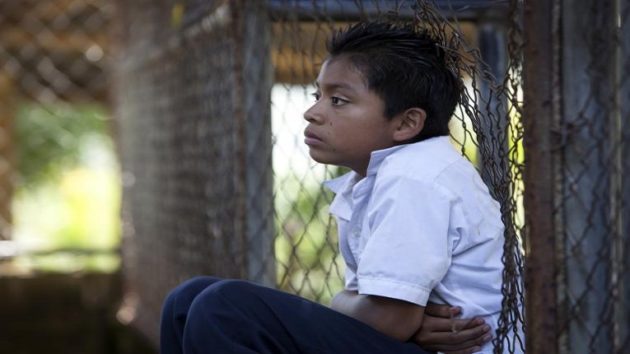
COVID-19: UNICEF warns of continued damage to learning and well-being as number of children affected by school closures soars again

9 December 2020

The number of schoolchildren affected by COVID-19-related school closures soared by 38 per cent in November, placing significant strain on the learning progress and well-being of an additional 90 million students globally. According to data collected by UNESCO, classrooms for nearly 1 in 5 schoolchildren globally – or 320 million – are closed as of 1 December. (UNICEF)


Inclusion in education: Turning commitments into action for children with disabilities

3 December 2020

An estimated 40% of the world’s poorest countries failed to support learners at risk of exclusion during the pandemic. Many children with disabilities are expected not to return to school after COVID-19. The challenges exposed during the pandemic around the education of marginalized learners call for a transformative agenda. (UNESCO)

Give teachers a say: Tackling teachers’ work-related stress during coronavirus

26 November 2020

In many education systems and schools, routines and practices that were in place for decades have been changed overnight, overturned and updated. Even before the COVID-19 crisis, teacher shortages were a real prospect in many education systems. In a joint communication, UNESCO, the ILO, UNICEF Education International and the UNDP declared that about 70 million teachers will be needed worldwide by 2030. (OECD Education and Skills Today)

Are countries ready to build learners’ resilience in times of crises?

25 November 2020

Since the start of the new academic year, and with an increase in school dropout rates coupled with continued uncertainty, many schools have been struggling to ensure that learning never stops. Therefore, it is necessary – more than ever before – to make learning feel relevant again.  This implies making greater efforts to foster the cognitive, social and emotional skills as well as the responsible behaviours that prepare young people to prevent and face future crises. (UNESCO)

UNESCO’s key achievements in 2020 with the specific focus on COVID-19

17 November 2020

The COVID-19 pandemic has led to the rethinking of priorities of many aspects of society. COVID-19 tells us that scientific cooperation, continuing education, the importance of reliable information based on scientific and undisputable facts, the need to fight disinformation, fake news and xenophobia on Internet, the power of culture and reliable knowledge are essential to address unprecedented challenges, to strengthen fabric of society, to strengthen solidarity in this critical moment and to build a better future in the post-COVID-19 era. (UNESCO Tashkent Office)

Learning about a pandemic – and for a more uncertain world

11 November 2020

These days, education is no longer just about teaching people something or preparing them for all eventualities, but about helping them develop a reliable compass and the tools to navigate with confidence through a world that is increasingly complex, increasingly volatile and increasingly uncertain. (OECD Education and Skills Today)

COVID-19 Response Toolkit

5 November 2020

Eight chapters below developed by UNESCO and Coalition partners provide COVID-19 education response frameworks, country practices and examples, concrete steps for intervention. These approaches can be used regardless of response stage; the kit is modular and each of its chapters can be used in a stand-alone manner. (UNESCO)

Prepared for the Future: A new SDG 4 indicator that combines completion with learning

3 November 2020

The Sustainable Development Goal (SDG 4) for education recognizes that all children deserve, and have the right to, a quality education. Over the last three decades, enrollment has risen to historic highs, though school disruptions and the economic implications of COVID-19 will offset some of these gains. For children to be fully prepared for the future, they need to complete their education, and emerge having learnt at least the basics. The new global indicator will combine all these critical factors to provide a snapshot of progress towards SDG 4. (World Education Blog)